
|
|
ISSUE
433
|
Is Deadstock Falling Out of Fashion?
Variance and unpredictability of consumption
sustainability-lab.net
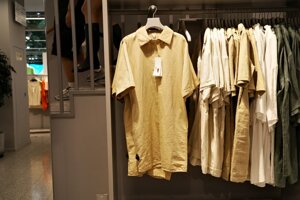
RegulationEcodesign for Sustainable Products (ESPR, 2024/1781) requires large apparel companies to publish timely data on deadstock on their websites. In particular, they will have to declare the number and weight of unsold products and how they were handled (reuse, recycling or disposal). For medium-sized companies, the obligation will be triggered in 2030 while small companies, which in the fashion ecosystem are not few, remain outside the measure. With these horizons, it remains difficult to imagine the effectiveness of a prescription animated by a mixture of good intentions and bureaucratic zeal whose connection to “ecodesign” is unclear. Right to discourage premature obsolescence, inform consumers, and prohibit destruction of unsold items. Even garments designed to the highest standards of sustainability, however, may not make it off the shelves due to errors in size, color or style, and, in any case, correcting them is a primary interest of the companies themselves. It has been estimated that about 30% of the apparel industry’s production goes unsold each year due to forecast errors (size, pattern, color, trend) or logistical inefficiencies. According to McKinsey/Business of Fashion in 2023 about 2.5-5 billion items were produced in excess of actual demand, worth $70-140 billion.
Over the years, the fashion industry has developed various arrangements to contain risks and costs of unsold items. These were significantly lower in the postwar period when the sector did not yet have an industrial footprint. Clothes were still sewn in homes or had to be made to measure in tailors’ shops. Those who could afford it turned to haute couture ateliers. The few industrial enterprises produced cheap garments that, as Giorgio Armani once noted, to avoid inventories were designed so that a “46” would also fit a “48.” The explosion since the 1960s of clothing variety and variance, the advent of ready-to-wear and the development of independent retail and distribution chains have forced the industry to forge a set of practices and tools to manage the increasing unpredictability of consumption.
Will AI be able to reduce deadstock?
A stylized representation of these tools takes the start, for each season (F/W or S/S), 15 to 18 months before the start of sales, when yarn and fabric manufacturers in the trade shows their samples to garment companies. These choose the items (sample pieces) on which they materially develop their collections, which, about six months later, they present (fashion shows or fashion fairs) to store managers. In turn, these, who in principle take the risk of unsold items, examine prototype clothes and decide which ones to order (colors, patterns, sizes…). On this basis, garment companies set “production launches” and order the yarns and fabrics needed to produce what the outlets require. Embellished with the glamour of fashion shows, public relations and press services that help steer consumption in the desired direction, this architecture has its own rationality and functionally spreads resources and risks among the various links in the chain. It is, in fact, a complex heuristic process that, every six months, starts with tens of thousands of new fabric proposals (so many are presented at fairs such as Milano Unica or Premiere Vision) and through filters of the patterns made by garment makers and selected by buyers, reduces to a range of three to four thousand fabrics those that will be used in the production of the one thousand to two thousand types of garments that will actually be displayed in the windows.
The one described, with its issues and costs, is only the most important slice in the magnum sea of apparel markets that also includes segments such as ready-to-wear and online sales. New organizational architectures have also been developed in more recent years. Many brands have bypassed the litany of vacations to leverage the integration of design and manufacturing. In this way, they reduced the time between demand and production, and data from proprietary outlets were used to initiate rapid re-assortments. Some large distribution networks have focused on design by delegating production to global subcontracting chains to keep costs down. Brands such as Temu and Shein, finally, have turned the tables: the two platforms continuously churn out collections and, based on sales and the digitization of dense networks of low-cost suppliers, have established themselves in what has been called ultra fast fashion (low-value products made in weeks instead of months).
All these different architectures will compete for market share for many years, leaving many casualties in the field. Fashion, by its nature, is fluid, and the deadstock knot lends itself to being approached in many different ways. One factor that could radically change the state of affairs is AI. Some operators are already developing applications that read point-of-sale data to decide, on a store-by-store basis, what (patterns, colors, sizes) and in what quantities to produce and, at the same time, provide arrangements to suppliers to quickly set the fashion manufacturing machine in motion. And, likely, cut deadstock more than ESPR will be able to do.
Andrea Balestri
Photo: Flynn Zhou on Unsplash
|
Rassegna del 30 Gennaio, 2026 |
|
20 di 25 della rassegna... |
|---|
|
|---|


|
ESO Società Benefit arl Via Giuseppe Ungaretti, 27 - I 20073 - OPERA - MI Tel. (+39) 02.530.111 R.A. - Fax (+39) 02.530.11.209 - info@eso.it - www.eso.it P.IVA IT 13288930152 - N. Iscr. Reg. delle Imprese di Milano 13288930152 REA 1636344 - Capitale sociale € 300.000,00 Iscritto all’Albo Nazionale Gestori Ambientali Sezione Regione Lombardia - Iscrizione n° MI31797 Iscritto all’Albo Nazionale per il Trasporto Conto Terzi. - Iscrizione n° MI-0884798-E © Copyright 2022 - All Rights Reserved GOGREEN® è un marchio registrato di ESO - © 2022 |
|---|