|
|
ISSUE
440
|
From Circular Products to Circular Brands
Why the textile and sports industry must rethink branding, and how the Brand Value Circles can help lead the transition

The textile and sports industry stands at a defining crossroads.
On one side lies a system built on speed, volume, and global scale, an industry that has mastered efficiency, trend cycles, and cost optimisation. On the other side lies an urgent and unavoidable reality: Planetary limits, regulatory pressure, and rapidly evolving expectations from customers, partners, and society at large.
Circular initiatives like ESO Recycling demonstrate that the industry is already taking important steps, rethinking waste, materials, and product lifecycles. But circularity alone is not enough. The next frontier is not just circular products. It is circular brands. Because in today’s market, sustainability is no longer just an operational issue. It is a strategic, commercial, and reputational issue. And increasingly, it is a branding issue.
The Brand Value Circles: A practical framework for a complex challenge
To navigate this shift, many companies are seeking ways to integrate sustainability, innovation, and brand strategy into a single, coherent approach. One such approach is the framework The Brand Value Circles, a strategic toolbox developed as a spin-off from research at DTU (Technical University of Denmark), combining academic insight with real-world application. It was created to bridge a critical gap between sustainable innovation and brand-building, helping companies turn ambition into real business and market impact.
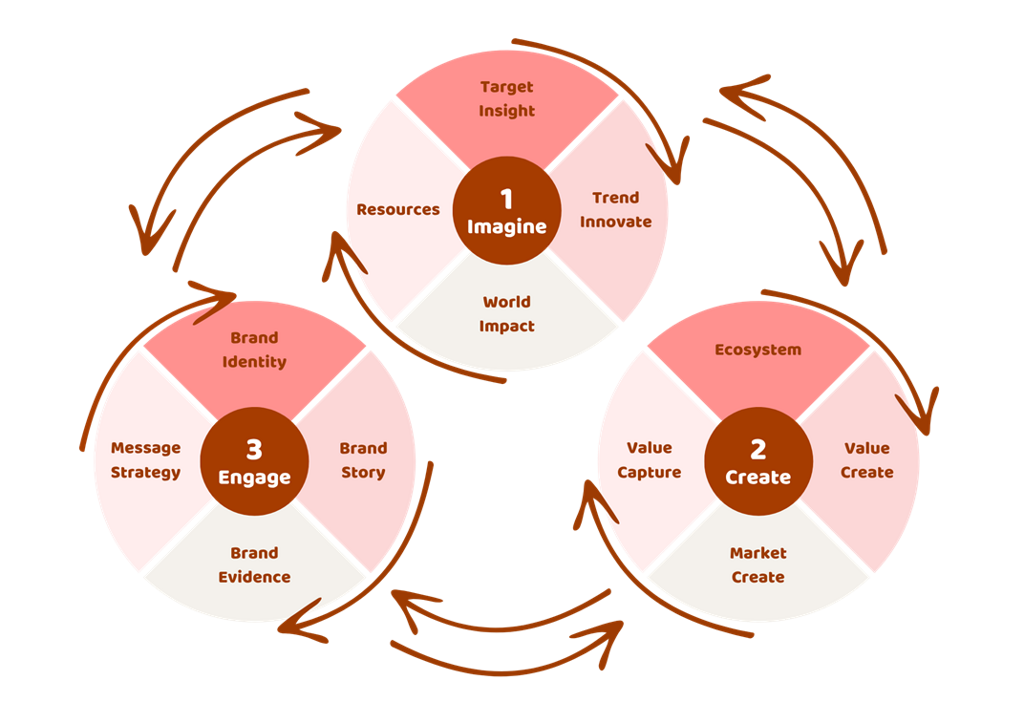
At its core, the framework brings together three interconnected dimensions:
- Imagine – understanding customers, industry trends, and impact
- Create – designing business models and value creation
- Engage – building credible communication, trust, and participation
Together, these three “circles” guide companies from early insight to real-world implementation and market engagement, helping align teams and decisions across the entire organisation. It is not a communication model.
It is a business and brand transformation tool.
The new expectation: Brands must do more than sell
We are entering what many call the Decade of Action, a period where sustainability shifts from being a “nice to have” to a baseline expectation.
Consumers, regulators, and stakeholders are demanding something fundamentally different from brands:
- Not just promises, but proof
- Not just storytelling, but transformation
- Not just products, but responsibility
As defined in The Brand Value Circles framework, a true Sustainable Brand is:
“A brand built on a sustainable business model, operates sustainably, and leads the transition to a circular economy with integrity, evidence, and impact.”
This is a profound shift. Historically, branding has been about differentiation, desirability, and emotional connection. Today, branding is evolving into something far more powerful, and far more demanding: A strategic system for how companies create value within planetary boundaries and help customers, partners and other stakeholders to act on good intentions.
The textile paradox: High impact, high opportunity
Few industries illustrate this shift more clearly than textiles.
The sector is:
- One of the most resource-intensive globally
- Deeply embedded in complex global supply chains
- Highly exposed to scrutiny, from labour practices to environmental impact
- At the same time, uniquely positioned to influence consumer behaviour
Textiles are not just functional products. They are identity, expression, and culture. From performance sportswear to everyday lifestyle apparel, the industry shapes how people see themselves, and how they act.
This creates a paradox: The same industry that has accelerated consumption now holds the power to reshape it.
The gap: Innovation without engagement
Across the textile and sports industry, we see significant progress:
- Recycling and take-back systems
- New materials and fibres
- Circular business models such as repair, resale, and rental
- ESG frameworks and reporting
But too often, these efforts remain:
- Fragmented
- Poorly communicated
- Difficult for customers to understand
- Disconnected from brand identity
This creates a critical gap: The gap between what companies do, and what the market perceives. And in today’s environment, that gap leads to two equally problematic outcomes:
- Greenwashing – saying too much
Overpromising, vague claims, lack of documentation - Greenhushing – saying too little
Holding back real progress due to fear of scrutiny
Both undermine trust. Both slow down transformation.
Why branding must become a strategic sustainability tool
To close this gap, branding must evolve from a communication layer to a strategic driver of change. Because brands have a unique power:
- They shape demand
- They influence behaviour
- They define what is normal and desirable
Historically, brands helped create a culture of overconsumption.
Now, they must help create a culture of better consumption.
This is not just a moral imperative. It is a commercial one.
Research shows a strong and growing correlation between perceived sustainability and brand preference meaning sustainability is increasingly a driver of growth, not just compliance.
In this context, branding becomes more than storytelling.
It becomes infrastructure for transformation.
The three Circles in the Brand Value Circles Toolbox
Imagine: Rethinking value from the start
The first circle, Imagine, is about understanding what value means in a changing world.
Traditionally, value in the textile and sports industry has been defined by:
- Price
- Performance
- Design
- Speed to market
But in a sustainable context, value expands to include:
- Environmental impact
- Social responsibility
- Durability and longevity
- Circularity
- Transparency
This requires a deeper understanding of customers, not just as buyers, but as participants in a system. One of the biggest challenges here is the well-known attitude–behaviour gap:
- The majority of consumers say they want to act sustainably
- Only a small minority consistently change behaviour
But why?
Because sustainable choices are often:
- Harder to understand
- Less convenient
- Perceived as more expensive
- Poorly communicated
This is not just a consumer problem. It is a design, business, and brand problem.
Create: From products to systems
The second circle, Create, focuses on turning ambition into reality.
For the textile and sports industry, this means moving beyond product innovation to system innovation.
Circular initiatives like ESO Recycling are powerful examples of this shift:
- Collecting used materials
- Reinserting them into new production cycles
- Extending lifecycle value
But to unlock full potential, these systems must be embedded into:
- Business models
- Partnerships and ecosystems
- Market logic
This raises critical questions:
- Who owns the product over time?
- How is value captured across the lifecycle?
- How do we design for reuse, repair, or recycling?
- How do we collaborate across the value chain?
Because circularity is not a product feature.
It is a system property.And systems require collaboration.
Engage: From storytelling to proof
The third circle, Engage, is where many companies struggle.
Not because they lack stories, but because they lack:
Clarity, credibility, and evidence
In today’s environment, communication must:
- Be precise
- Be transparent
- Acknowledge trade-offs
- Be backed by data
Customers are no longer satisfied with generic claims like:
- “Eco-friendly”
- “Sustainable”
- “Green”
They want to know:
- What exactly is better?
- Compared to what?
- By how much?
- What are the limitations?
This reflects a broader shift: From purpose-driven branding to proof-driven branding In the textile industry, where supply chains are complex and scrutiny is high, this shift is especially critical.
From stakeholders to “dreamholders”
A key idea in the Brand Value Circles is the shift from stakeholders to dreamholders. Dreamholders are people who share a common ambition for a more sustainable future, and actively participate in creating it.
They include:
- Customers
- Employees
- Partners
- Communities
For the textile and sports industry, this opens new opportunities:
- Co-creation with customers
- Transparency in sourcing and production
- Participation in circular systems
- Community-driven brand building
This is where branding evolves from communication to collaboration.
What this means for industry leaders
For leaders in the textile, sports, and lifestyle sectors, the implications are
clear:
1. Sustainability must move into the core of the brand
Not as a campaign—but as a strategic foundation
2. Circularity must be made visible and meaningful
Systems like ESO Recycling must be understood and experienced, not hidden in operations
3. Value must be redefined
From volume, to longevity, from ownership, to access, from price, to impact
4. Communication must evolve
From storytelling, to evidence, from persuasion, to transparency
5. Collaboration is essential
No company can build a circular brand alone
A new role for brands: Agents of Change
We are witnessing a fundamental shift in the role of brands.
From:
- Marks of ownership
- Symbols of identity
- Drivers of consumption
To: Agents of Change within a wider systems. Brands now coordinate:
- Materials
- Supply chains
- Business models
- Customer behaviour
- Cultural meaning
This is especially true in the textile and sports industry, where every product carries environmental, social, and cultural implications.
The opportunity ahead
The transition to circularity is often framed as a challenge.But it is also one of the greatest opportunities for the industry:
- To innovate
- To differentiate
- To build long-term trust
- To create new business models
- To lead globally
Italy, with its strong heritage in craftsmanship, quality, and design, is uniquely positioned to lead this transformation. But leadership today requires more than operational excellence. It requires:
- Clarity of purpose
- Integration of strategy and brand
The courage to communicate transparently
From intention to engagement
Sustainability is no longer about intention. It is about implementation and engagement.
The Brand Value Circles provide a way to bridge the gap between:
- Innovation and market
- Strategy and communication
- Impact and perception
Because ultimately a sustainable brand is not what a company says It is what a company does, and what others experience, trust, and participate in. For the textile and sports industry, the question is no longer: “Should we become more sustainable?” But: “How do we build brands that make sustainability the preferred, and normal choice?”
Author: Bettine Ortmann
Connect with the Author: https://www.linkedin.com/in/bettineortmann/
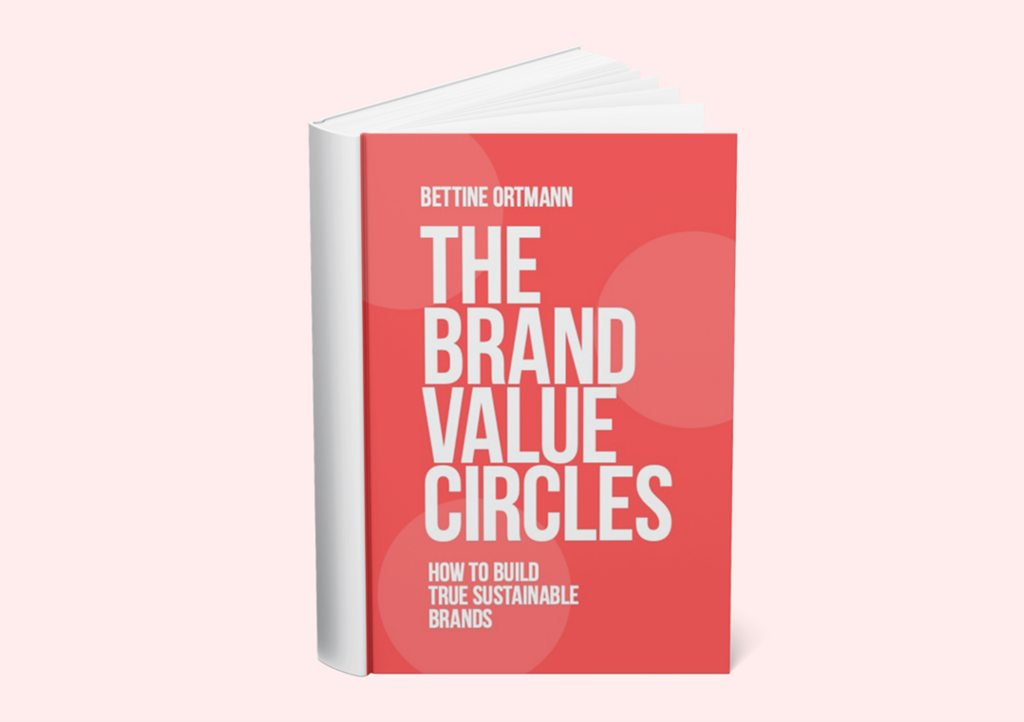
Learn more - Buy the book
Interested in learning more? Buy the book here:
https://www.futuretribe.dk/product-page/the-brand-value-circles
Reach out – and be inspired
Or reach out to the Author Bettine Ortmann: bettine@futuretribe.dk og you would like to learn more or book and maybe book an Inspirational Talk
About the author
Bettine Ortmann is a systemic brand architect working at the intersection of sustainable value creation, trend innovation, and business strategy. She views brand not as communication alone, but as a value-creating architecture embedded in business models, culture, and ecosystems.
She holds a Master’s degree from Copenhagen Business School and an Executive Master in Sustainable Leadership from DTU, where the Brand Value Circles framework was developed as part of her research.
With more than 25 years of experience, she has worked with organisations including Ecco Shoes, Lego, Waves Shopping, Puori, COOP, HBO Nordic, Rockwool Dansk Copenhagen, Intel Denmark and many more. Bettine is the founder of FutureTribe, helping organisations turn sustainability ambitions into real business innovation and engagement.
|
Rassegna del 8 Maggio, 2026 |
|
22 di 27 della rassegna... |
|---|
|
|---|


|
ESO Società Benefit arl Via Giuseppe Ungaretti, 27 - I 20073 - OPERA - MI Tel. (+39) 02.530.111 R.A. - Fax (+39) 02.530.11.209 - info@eso.it - www.eso.it P.IVA IT 13288930152 - N. Iscr. Reg. delle Imprese di Milano 13288930152 REA 1636344 - Capitale sociale € 300.000,00 Iscritto all’Albo Nazionale Gestori Ambientali Sezione Regione Lombardia - Iscrizione n° MI31797 Iscritto all’Albo Nazionale per il Trasporto Conto Terzi. - Iscrizione n° MI-0884798-E © Copyright 2022 - All Rights Reserved GOGREEN® è un marchio registrato di ESO - © 2022 |
|---|